

Italian Residency After Brexit: Visas and Requirements

Could owning a home in Italy still leave you without the right to live there? Yes: property ownership alone doesn’t grant non-EU citizens permission to stay beyond the 90-day limit. Understanding how to get residency in Italy after Brexit for UK/US citizens starts with identifying which rules apply to your circumstances.
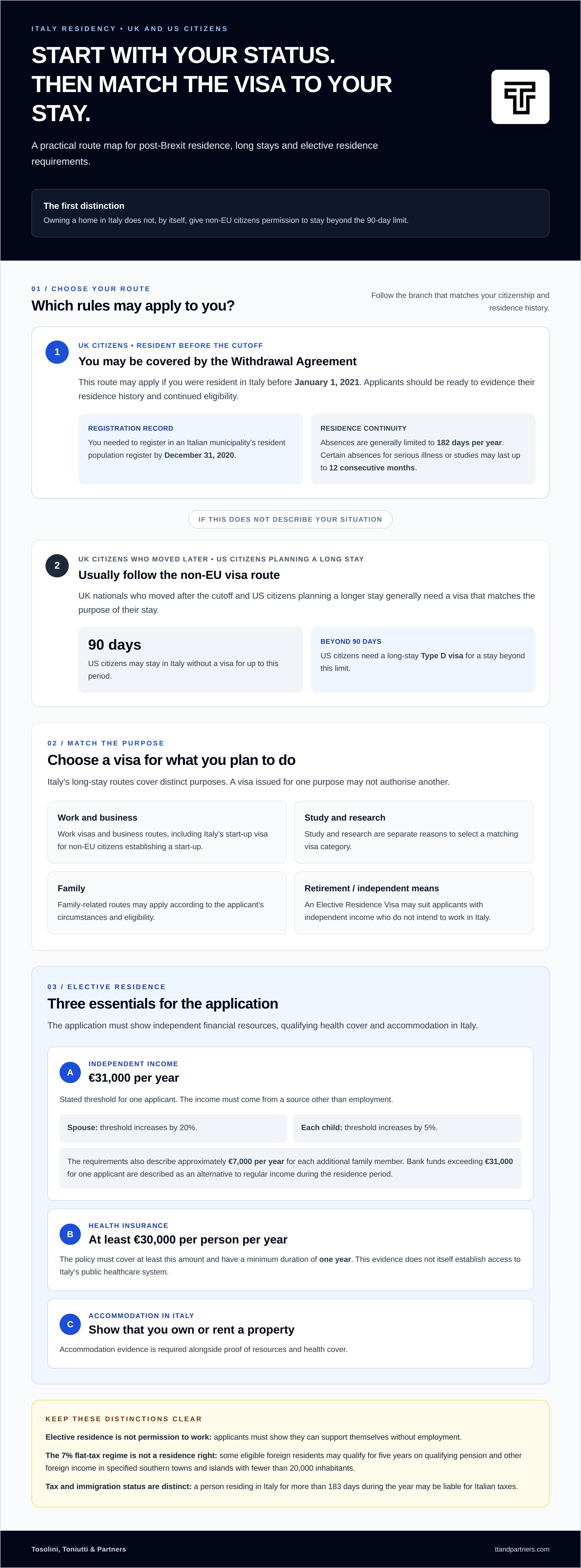
For UK nationals who were resident in Italy before January 1, 2021, rights under the Withdrawal Agreement may protect their residence. UK nationals who moved later, and US citizens planning a longer stay, generally need to follow the visa route for non-EU nationals. US citizens may stay in Italy for up to 90 days without a visa, according to the European Commission.
The right pathway depends on the purpose of your stay, such as retirement, work, study, family or business. This guide explains who may qualify under the Withdrawal Agreement, which visa categories may fit different plans, and the main income, accommodation and insurance requirements. It also outlines how a visa application leads to a residence permit in Italy.
Table of Contents
Eligibility to continue living in Italy after Brexit
UK citizens already resident in Italy before January 1, 2021, may retain residence rights under the Withdrawal Agreement. For those asking how to get residency in Italy after Brexit for UK/US citizens, the first distinction is whether UK residence was established before the relevant cutoff. Applicants should be prepared to provide evidence of their residence history and continued eligibility. They also needed to register in an Italian municipality’s resident population register by December 31, 2020. These dates and supporting documentation help distinguish protected residents from UK nationals moving later.
Residence continuity generally remains intact when eligible UK citizens and family members are absent for no more than 182 days per year. Certain absences, including those connected with serious illness or studies, may last up to twelve consecutive months without interrupting continuity. A non-EU family member entitled to join a protected UK resident must receive the required entry visa free of charge. A qualifying stable-partner relationship must have existed and been lasting before December 31, 2020, although the residence authorisation application may follow later.
US citizens may stay in Italy for a maximum of 90 days without a visa, according to the European Commission. The question of how to get residency in Italy after Brexit for UK/US citizens also depends on the applicant’s purpose and eligibility. For a longer stay, an Italian visa must match that purpose. An Elective Residence Visa may suit someone with independent income, but applicants must show they can support themselves without employment and own or rent accommodation in Italy. The stated minimum annual income is €31,000 for one applicant, increasing by 20% for a spouse and 5% for each child.
Some eligible foreign residents may qualify for Italy’s 7% flat tax rate on qualifying pension and other foreign income for five years. The regime applies in specified southern towns and islands with fewer than 20,000 inhabitants. It is a tax option, not a residence right, so eligibility for each must be assessed separately.
Italian citizenship may offer another route for people with qualifying ancestry or marriage. For descent claims, the Italian-born ancestor generally must have been born after March 17, 1861, or still lived in Italy after that date. Naturalisation and the next descendant’s birth can also affect eligibility. Marriage applicants residing in Italy must have been married for two years before applying; applicants abroad must have been married for three years.
Income, health insurance, and accommodation requirements
For elective residence, your application must show three things: independent income, suitable health cover and accommodation in Italy. You must demonstrate that you can support yourself with income from a source other than employment, and that you own or rent a property in Italy. This route is for financially independent residents, not people seeking permission to work in Italy.
The stated income threshold for a single applicant is €31,000 per year. It increases by 20% for a spouse and 5% for each child. The requirements also describe an approximate additional €7,000 per year for each additional family member. Bank funds exceeding €31,000 for one applicant are described as an alternative to regular income during the residence period. Financial documentation should make clear how resources will support the applicant and accompanying family.
Applicants must provide qualifying health insurance covering at least €30,000 per person per year, with a minimum duration of one year. This insurance evidence supports the visa application, but it does not itself establish access to Italy’s public healthcare system. Healthcare access, tax liability, and immigration status are related but distinct matters. A person residing in Italy for more than 183 days during the year may be liable for Italian taxes.
For UK nationals and their families, a Biometric Residency Card provides evidence of the right to reside in Italy. It can serve as residence documentation when travelling within Italy or the Schengen Zone, but it does not replace entry requirements. Keep the card and relevant residence documents available when you travel.
Residence continuity also matters over a longer period. Eligible Withdrawal Agreement beneficiaries legally resident in Italy for more than 5 years are to have temporary residence cards exchanged for permanent residence cards. A clear file linking income, housing, insurance, and residence certificates can support the application and later records. For guidance on an individual Italian immigration matter, professional review can help align the evidence with the chosen residence route.
Italian visas for work, study, family, research, investment, retirement, and other purposes
Choose an Italian visa route that matches your reason for staying, such as employment, study, family or retirement. For UK citizens, the Withdrawal Agreement may affect which rules apply.
Visa Routes for Different Purposes
Italy’s long-stay visa routes cover distinct purposes, including work, study, research, investment and retirement. Choose the category that matches your planned activities: a visa issued for one purpose may not authorise another.
US citizens planning to stay beyond 90 days need a long-stay Type D visa. Since January 1, 2021, UK nationals seeking residency generally follow rules for non-EU nationals, unless protected by the withdrawal agreement. Italy’s start-up visa, created under Law 221/2012, is one route for non-EU citizens establishing a start-up business. An elective residence visa instead requires income from a source other than employment.
Family Members’ Income and Residence Documents
Family applications require evidence of both the principal applicant’s resources and each accompanying member’s circumstances. Italy’s approximate minimum annual income for residence registration is €9,000, with approximately €3,500 more for each additional family member.
These amounts concern residence registration, not the separate income test for elective residence. Residence documents must establish each family member’s relationship to the main applicant and the basis for their stay. For example, a spouse joining a resident may need evidence of the relationship and documents supporting their own residence status. Aligning the applications helps prevent inconsistencies between the main applicant’s visa purpose and relatives’ paperwork.
Family Members’ Rights and Reunification
Under the withdrawal agreement, a UK citizen’s children under 21 years old may qualify as close family members with residence rights in Italy. Certain extended relatives may qualify if related up to the second degree and they applied to join or accompany the UK citizen before December 31, 2020.
A non-EU family member entitled to join a UK resident protected by the Withdrawal Agreement must receive the required entry visa free of charge. Other family-reunification applications depend on the resident’s status and the relative’s relationship. Identify the applicable route first: rights under the agreement and later family reunification have different qualifying conditions.
If you plan to work remotely or as a digital nomad, confirm that the Italian visa category you apply for permits your intended work arrangement. Elective residence requires income from a source other than employment, so it does not fit an employment-based plan.
Staying beyond the 90-day Schengen limit without the required long-stay visa means exceeding the permitted visit. Working in Italy without a visa appropriate to the activity can create a mismatch between the stated purpose of stay and actual work, complicating immigration status.
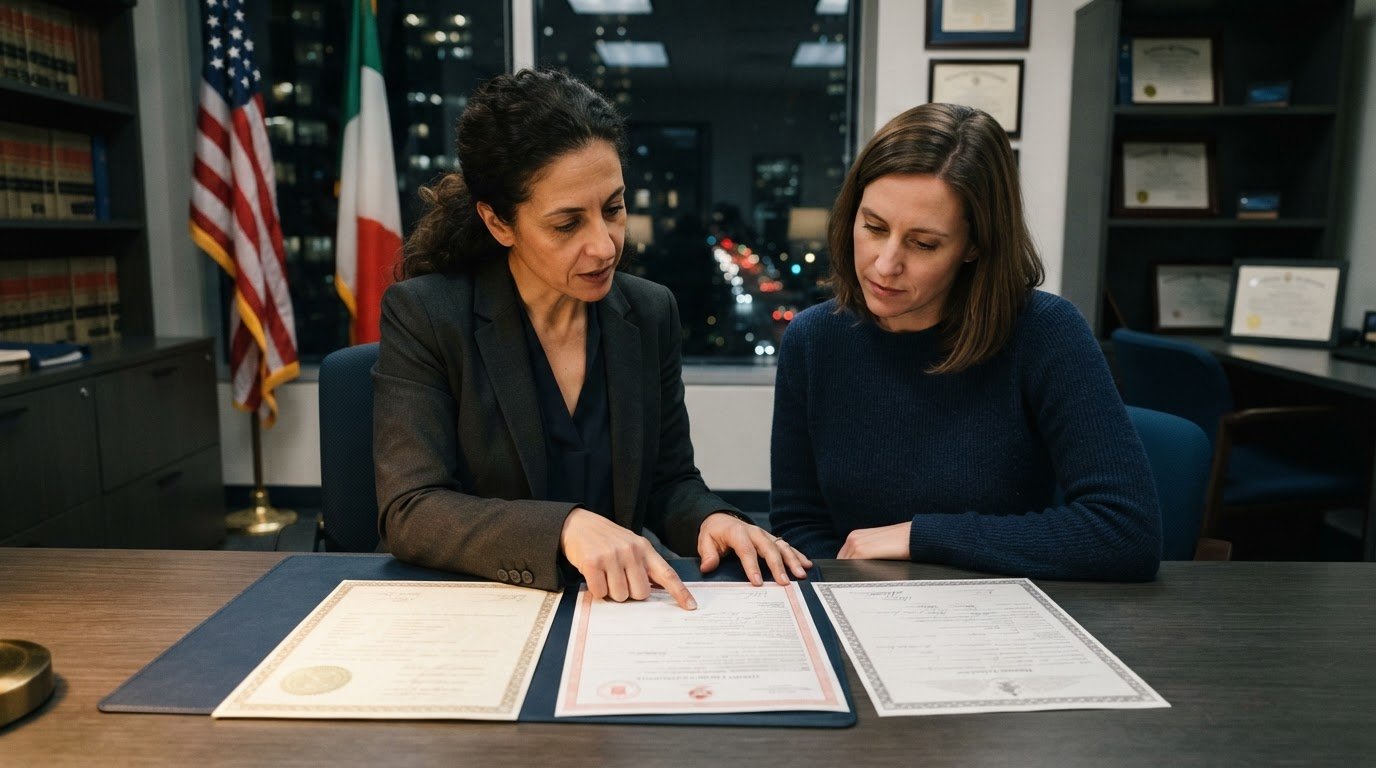
How a professional handles visa applications and post-arrival residence-permit procedures
A residence application links the visa purpose to the documents needed after arrival. For US citizens, the route depends on the planned stay and activity.
How a professional handles visa applications and residence registration in Italy
Before preparing an application, assess your purpose of stay, immigration status and supporting documents. Matching the visa request to the residence permit you will seek after arrival helps keep the process consistent.
US citizens staying more than 90 days need a long-stay Type D visa. After arrival, an elective-residency applicant must apply for a residence permit within eight days. Residence registration takes place at the registry office in the town where the applicant lives. The application includes evidence of accommodation, employment status, and financial resources.
Residence Permits for Non-EU Nationals
A residence permit documents a non-EU national’s authorisation to live in Italy for a specific purpose. Its type and renewal requirements depend on the immigration route and the individual’s circumstances.
An elective-residence visa is valid for one year and must then be renewed. To renew it, you must show that you continue to meet the original requirements. A residence permit for a foreign spouse of an EU citizen is valid for five years; the application requires a marriage certificate and proof of accommodation. UK nationals protected by the Withdrawal Agreement follow a separate residence-card framework.
Residency Requirements for US Citizens
US citizens planning to live in Italy need a visa suited to their intended stay, followed by the relevant residence-permit application. Requirements depend on the purpose, such as retirement, work, family or another eligible category.
For elective residence, applicants must demonstrate autonomous support from non-employment income and provide evidence of owned or rented accommodation. Qualifying health insurance must cover at least €30,000 per person per year for a minimum of one year. These requirements shape the application file and distinguish long-term residence from a short visit.
For help coordinating an Italian immigration application and its residence-permit requirements, contact Tosolini, Toniutti & Partners.
Tosolini, Toniutti & Partners: ITALIAN CITIZENSHIP
Tosolini, Toniutti & Partners assists with Italian immigration matters and Italian citizenship applications. If you plan to apply for a visa or residence permit, the firm can help align your application with your purpose for living in Italy. If you may qualify through ancestry or marriage, citizenship is a separate route to consider.
The right next step depends on your circumstances, including your current status, family connections and intended length of stay. A review can clarify which immigration or citizenship route may fit and which documents are relevant to your application.
For guidance on your Italian immigration or citizenship matter, contact Tosolini, Toniutti & Partners.
Shape Your Next Step Around Your Plans
Knowing how UK and US citizens can get residency in Italy after Brexit is only the starting point for planning a move. Next, match your plans in Italy to the appropriate legal route, taking into account how family, work and longer-term goals may affect your decision.
For some people, Italian immigration or citizenship is central. Others may also need to consider cross-border plans involving the United States. Tosolini, Toniutti & Partners handles E-1, E-2, and O-1 visas, alongside its Italian immigration and citizenship work. These are distinct pathways, so a clear view of your objectives helps keep each application focused.
Start a conversation about the route that fits your circumstances: Contact Tosolini, Toniutti & Partners. With a considered plan, your next move can be grounded in the right legal pathway and directed toward the life you intend to build.
Frequently Asked Questions
Who Can Benefit from this Service?
If you are planning a move between the United States and Italy, professional immigration support can help you navigate the process. Tosolini, Toniutti & Partners assists individuals and corporate clients with Italian immigration, residence permits and citizenship matters. A US citizen planning a long-term stay, for example, may need to match their purpose to an Italian residence route. Someone with Italian ancestry may instead explore citizenship eligibility.
What are the Italian residency requirements for UK citizens after Brexit?
For UK citizens, the rules depend in part on whether they were living in Italy before Brexit. Those protected by the Withdrawal Agreement must continue to meet the relevant conditions and document their residence history; absences may affect continuity. UK citizens who moved later generally follow non-EU immigration rules. A spouse, child or qualifying partner may have a separate right to join, depending on family status and when the relationship began.
Which Italian visas allow UK and US citizens to live in Italy long term?
Long-term visa options depend on your reason for moving, including employment, study, family, research, investment or retirement. US citizens planning to stay beyond a short visit need a long-stay Type D visa. An elective-residence visa may suit applicants with independent income from sources other than employment. Italy also offers a start-up visa for non-EU citizens seeking to establish a start-up business. Choose the category that corresponds to the activity you plan to pursue in Italy.
How can UK or US citizens qualify for Italy’s elective residence visa, and what income is required?
Applicants must show they can support themselves through income from a source other than employment and provide evidence that they own or rent a home in Italy. The stated minimum for one applicant is €31,000 per year. It increases by 20% for a spouse and 5% for each child. Applicants also need qualifying health insurance. This route does not authorize employment as the basis for financial support.
How can a professional help UK or US citizens apply for an Italian work, study, or family reunification visa?
A professional can assess your planned activities and family circumstances, then help match your application to the relevant visa category. In a family case, this means considering your relationship to the resident and your own status. For work or study, the application should accurately state the purpose of your stay. Tosolini, Toniutti & Partners provides Italian immigration assistance to individuals and corporate clients.
What documents, fees, and processing times are involved when a professional handles an Italian long-stay visa application?
Required documents depend on the visa route and may include evidence of your purpose of stay, finances, accommodation and insurance. An application for a Withdrawal Agreement residence card requires four passport-sized photographs. Processing times depend on the visa category, application materials and relevant consular process, so plan around these factors.

Comments