

Legal pitfalls of US real estate investment

A property’s appeal does not show whether its legal foundations are sound. The legal pitfalls of US real estate investment can include title defects, zoning restrictions, accessibility requirements, lease terms, and federal rules that shape how a property may be used and operated. The Fair Housing Act prohibits housing discrimination in buying, selling, or renting based on race, gender, disability, or religion.
Investors naturally weigh location, condition, and income potential, but the legal framework deserves equal attention. It can affect a project before closing and throughout ownership. This guide explains how inspection contingencies, property defects, land use, utilities, accessibility requirements, building codes, and lease terms can influence an investment. It also introduces federal rules such as RESPA, TILA, securities laws, and FIRPTA, showing how legal obligations may affect a property’s use, transaction terms, and ongoing responsibilities.
Table of Contents
Using inspection contingencies and assessing property defects
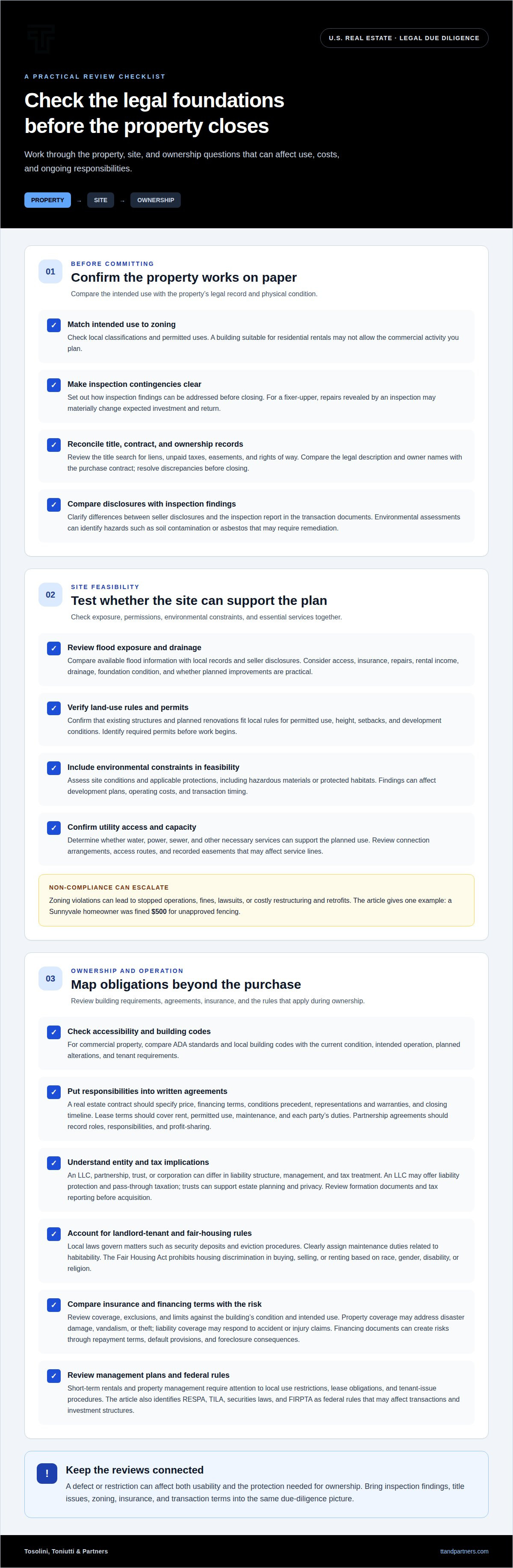
Before committing to a property, match its intended use to local zoning classifications and permitted uses. A building suited to residential rentals may not support the commercial activity you plan. Make the purchase agreement’s inspection contingency clear so it sets out how you can respond to findings before closing. For a fixer-upper, inspection findings may reveal repairs that materially change the expected investment and return.
Connect the property’s physical condition with its ownership records during due diligence. A title search can identify liens, unpaid taxes, easements, and rights of way that affect use or marketability. Compare the title report’s legal description and owner names with the purchase contract, and resolve discrepancies before closing. Review seller disclosures alongside the inspection report. If a disclosed condition differs from an inspector’s finding, clarify the discrepancy in the transaction documents. Environmental assessments can identify hazards such as soil contamination or asbestos that may require remediation and affect planned renovations.
Insurance is another part of assessing the property’s exposure. Property coverage can address damage from disasters, vandalism, or theft, while liability coverage can respond to claims involving accidents or injuries on the premises. Compare covered risks, exclusions, and limits with the building’s condition and intended use. A landlord policy may address rental-specific risks, including lost income or tenant-caused damage. Consider insurance terms alongside inspection findings, title issues, and zoning: a defect or restriction can affect both the property’s usability and the protection needed for ownership.
Flood zones, zoning, and utility due diligence
Flood exposure can affect access, insurance, repairs, and expected rental income. Pair a flood-zone review with an assessment of drainage, foundation condition, and intended use. Before finalizing transaction assumptions, compare available flood information with local records and seller disclosures. Site exposure may also affect whether planned improvements are practical.
Match the proposed rental or business activity to local zoning and land-use rules. These rules can govern permitted uses, building heights, setbacks, and development conditions. A parcel that appears suitable may not allow your intended operation. Confirm that existing structures and planned renovations fit the applicable classification, and identify required permits before work begins. Local requirements determine what can be built and how the property can generate income.
Environmental due diligence should cover both site conditions and applicable protections. An environmental assessment can identify soil contamination or asbestos that may require remediation. Projects may also face requirements concerning hazardous materials or protected habitats. These findings can affect development plans, operating costs, and transaction timing, so include them in feasibility decisions rather than treating them as separate technical details.
Utility review adds another practical layer. Determine whether water, power, sewer, and other necessary services reach the property and can support its planned use. Review connection arrangements, access routes, and recorded easements that may affect service lines. For example, converting a site to rental use may require infrastructure beyond what its current use needs.
Zoning non-compliance can force operations to stop and lead to fines, lawsuits, or costly restructuring and retrofits. A Sunnyvale homeowner, for example, was fined $500 for unapproved fencing. If these constraints affect a pending purchase, real estate closing questions can be discussed before transaction terms are finalized.
ADA standards, building codes, and lease agreements
Commercial property due diligence includes reviewing ADA standards, local building codes, and lease obligations. Accessibility or code issues may affect how a building can be occupied or used. Compare its current condition with the intended operation, planned alterations, and tenant requirements. Address identified work in the transaction plan instead of assuming a future renovation will resolve every issue.
A real estate contract should specify the purchase price, financing terms, conditions precedent, representations and warranties, and closing timeline. Purchase-agreement contingencies can define how inspection findings or financing conditions affect the parties’ next steps. Lease agreements should set out rent, permitted use, maintenance responsibilities, and each party’s duties. Partnership agreements should document partners’ roles, responsibilities, and profit-sharing arrangements to reduce ambiguity if decisions or costs become contested.
Ownership through an LLC, partnership, trust, or corporation can differ in liability structure, management, and tax treatment. An LLC may offer liability protection and pass-through taxation, while trusts can support estate planning and privacy. The consequences depend on the entity and transaction, so review formation documents and tax reporting before acquisition.
Landlord-tenant laws vary by location and govern matters such as security deposits and eviction procedures. Lease terms should clearly assign maintenance duties related to habitability. The Fair Housing Act prohibits housing discrimination in buying, selling, or renting based on race, gender, disability, or religion. Consistent screening and management practices can help reduce discrimination risks.
Financing documents can create risks through repayment terms, default provisions, and foreclosure consequences. Short-term rentals and property management also require attention to local use restrictions, lease obligations, and procedures for handling tenant issues. An attorney’s review can help identify relevant provisions and safeguard the investment before you sign.
Federal real estate investment regulations
Federal rules affect financing, tenant relationships, fundraising, and foreign-owner transactions. The Fair Housing Act prohibits housing discrimination related to buying, selling, or renting based on race, gender, disability, or religion. RESPA, enacted in 1975, addresses settlement-cost disclosures and mortgage-related kickbacks; TILA calls for clear disclosure of loan terms and interest rates. These regulations make accurate transaction documents and consistent rental practices central to compliance. Understanding them is one way to address the legal pitfalls of US real estate investment.
Tax obligations depend on the property, ownership structure, and transaction. Investors may need to account for rental income, property transfer taxes, and capital gains when selling. Depreciation can affect tax reporting, while a 1031 exchange may allow an investor to defer taxes when its requirements are met. The Foreign Investment in Real Property Tax Act (FIRPTA) was passed in 1980, according to the Internal Revenue Service. Its relevance makes tax treatment an important part of planning a sale involving foreign ownership.
Foreign investors should consider FIRPTA alongside federal tax reporting and any state or local requirements connected to ownership and transfer. When investors raise capital from multiple sources, U.S. securities laws may apply, and the investment may fall under Securities and Exchange Commission regulations. REIT classification also depends on specific tests: a REIT must distribute at least 90% of income as dividends, derive at least 95% of income from real estate sources, and invest at least 75% of holdings in real estate or cash. These federal considerations form another layer of the legal pitfalls of US real estate investment.
State and local rules differ on property taxes, transfer taxes, land use, and landlord-tenant procedures. Local laws, for example, can govern security-deposit handling and eviction processes, while federal rules apply to covered conduct. Before closing, map each requirement to the property’s location and ownership structure. For legal guidance on transaction terms, discuss your real estate closing with Tosolini, Toniutti & Partners.
Tosolini, Toniutti & Partners: REAL ESTATE CLOSING
Tosolini, Toniutti & Partners provides real estate closing support for investors navigating a U.S. property transaction. This service is relevant when purchase terms, closing conditions, ownership arrangements, or transaction documents need legal attention before completion. A clear review connects the agreement’s provisions with your intended use and obligations. It also gives the parties a structured opportunity to address open issues before unclear terms carry into closing.
Prepare by organizing the transaction documents and identifying issues that could affect completion. The purchase price, financing terms, conditions precedent, representations, warranties, and closing timeline shape the parties’ commitments. Inspection or financing contingencies may also determine what happens if stated conditions are not met. Legal review can clarify how these provisions work together and identify questions the parties need to resolve. For investors buying through an entity or across borders, the transaction structure may add legal and tax considerations.
Closing support is particularly useful when the agreement includes several conditions, the property’s intended use raises legal questions, or the parties need a coordinated understanding of their responsibilities. It can help bring the transaction’s terms into focus, including what each party must deliver and which matters remain unresolved before completion. This is not a substitute for property inspections, environmental assessments, or tax planning; those address distinct aspects of due diligence. Instead, legal closing support helps keep the transaction documents and closing process aligned. For investors, that distinction supports informed decisions without treating closing as a formality. To discuss a U.S. property transaction, contact Tosolini, Toniutti & Partners.
Make the Next Investment Decision Deliberate
A sound investment starts with a clear view of how ownership, operations, and future plans fit together. Treat the legal pitfalls of US real estate investment as part of the decision, not paperwork to leave until closing. This perspective can help you assess whether a property supports your objectives and which legal questions need attention before you commit.
For investors whose plans also involve U.S. business or immigration matters, Tosolini, Toniutti & Partners offers E-1 VISA, E-2 VISA, and O-1 VISA services. These are distinct from REAL ESTATE CLOSING, which supports the property transaction. Keeping each matter in its proper scope can make the next steps clearer.
When you’re ready to discuss a transaction or related legal needs, contact Tosolini, Toniutti & Partners. A considered next step can bring greater clarity to your investment plans.
Frequently Asked Questions
What federal laws and regulations apply to U.S. real estate investors?
Federal rules can apply at different stages of an investment. The Fair Housing Act concerns housing discrimination, while RESPA and TILA address mortgage and settlement disclosures. Securities laws may become relevant when a project raises capital from multiple investors. FIRPTA is especially relevant to foreign ownership and property sales. Identify the transaction’s participants, funding structure, and planned use to determine which federal frameworks may apply.
What state and local real estate laws vary by location and affect investors?
State and local requirements can differ on property and transfer taxes, zoning, building permits, and landlord-tenant matters. Security-deposit handling and eviction procedures, for example, are governed by location-specific rules. Before evaluating a rental’s expected returns, identify the jurisdictions that regulate the property, then account for their requirements in its operating plan and projected expenses.
What are the legal risks of buying investment property, including title, liens, and undisclosed defects?
A title issue can affect ownership, financing, or usable access to the property. Liens, unpaid taxes, and easements may complicate a sale or restrict plans for the site. Undisclosed defects, such as roof problems or faulty wiring, can create unexpected repair needs. If inspection or title findings conflict with the purchase terms, use applicable contingencies to address them before closing.
What due diligence steps should investors take before purchasing U.S. real estate?
Start by comparing the purchase contract with the title report, including the owner’s name and legal description. Review recorded liens and easements, then arrange an inspection for structural and building-system concerns. Compare the findings with seller disclosures and the property’s planned use. For environmental concerns, assess whether contamination or hazardous materials could affect development, remediation, or ongoing operations.
How do zoning, building codes, permits, and environmental rules affect investment properties?
Zoning determines whether the proposed use, building height, and setbacks comply with local land-use rules. Building codes and permit requirements can shape renovations, additions, or a change of use. Environmental requirements may affect hazardous-material management or protected habitats. For example, a planned commercial conversion may require a different approval process from continued residential use, affecting feasibility, costs, and timing.



Comments