

The Strategic Benefits of an Italian Passport for US Citizens in 2026
- Gianni Mendes Toniutti, Esq.

- 1 day ago
- 12 min read
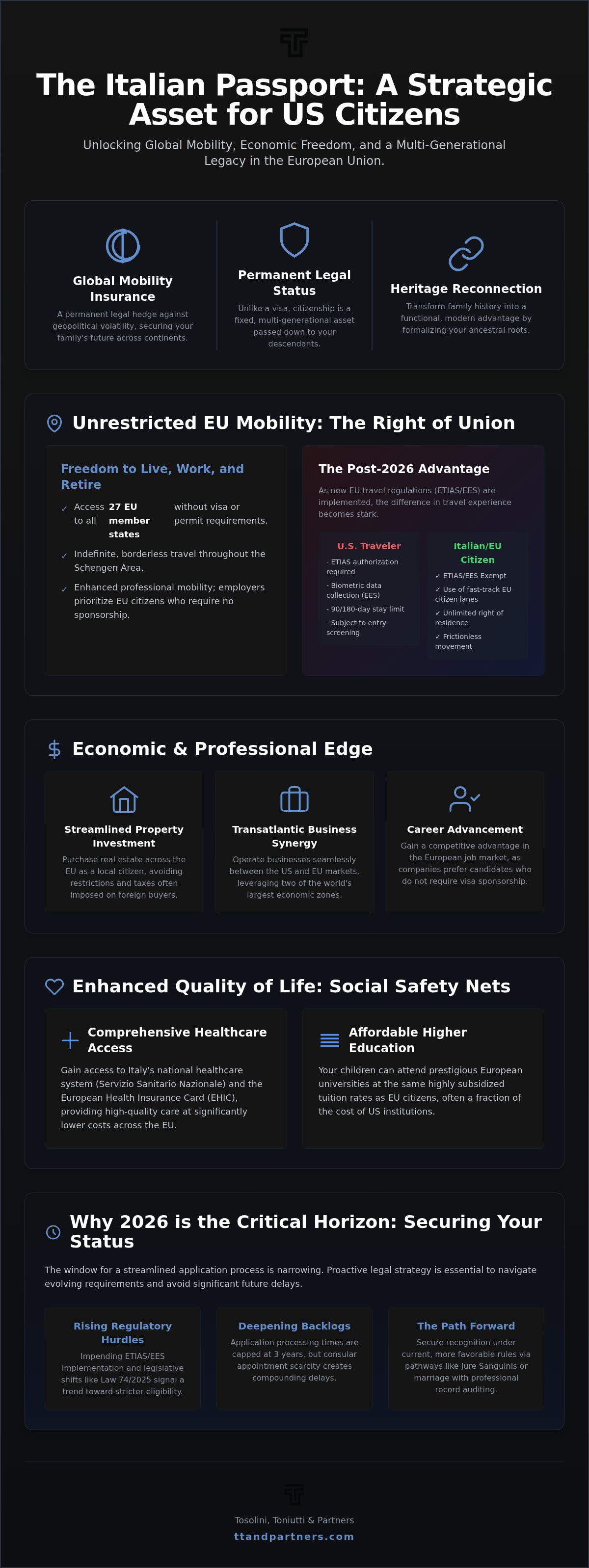
An Italian passport is no longer just a symbol of heritage; it's a sophisticated legal architecture that functions as a permanent hedge against geopolitical volatility. While many view it through the lens of travel, its true value lies in how it secures a multi-generational legacy. Understanding the strategic benefits of an Italian passport for US citizens is essential for those who want to transcend the limitations of a single jurisdiction. You likely recognize that the global landscape is shifting. The desire for a secure "Plan B" has moved from a luxury to a necessity for your family's long-term stability.
This article details how an Italian passport serves as a powerful asset for global mobility, economic freedom, and heritage preservation. We'll clarify the complexities of EU residency rules and address common concerns regarding tax implications and the evolving legal framework of Law 74/2025. You'll discover the practical advantages of unrestricted access to 27 EU member states, significantly lower healthcare and education costs, and the precise professional path to securing your dual citizenship status before further regulatory shifts occur.
Table of Contents
The Strategic Value of Italian Dual Citizenship in 2026
The Italian passport stands as a pinnacle of jurisdictional strategy. It's a sophisticated legal instrument that provides a gateway to the entire European Union legal framework, allowing individuals to operate within a system built on stability and human-centered values. Italian dual citizenship is the legal recognition of heritage that confers full EU rights. For many American families, this status serves as "Global Mobility Insurance," offering a secure alternative in a volatile global environment. Beyond the convenience of travel, the benefits of an Italian passport for US citizens include robust asset protection and the ability to architect an international lifestyle that spans continents. It provides the flexibility to pivot between markets and cultures with professional ease.
Beyond the Passport: A Multi-Generational Asset
Unlike visas or residency permits that expire or require renewal, Italian citizenship is fundamentally permanent. Once your status is recognized under Italian nationality law, it remains a fixed asset that you pass down to your children and future generations. It's a legacy tool that ensures your descendants retain the right to live, work, and study across Europe without ever needing to justify their presence. There's also a profound psychological dimension to this process. Reconnecting with ancestral roots through formal legal standing provides a sense of continuity that transcends simple genealogy. It transforms a family's history into a functional modern advantage, creating a bridge between the resilience of the past and the opportunities of the future.
Why 2026 is the Critical Year for Dual Nationality
The year 2026 marks a decisive turning point for transatlantic travel and residency. With the full implementation of the European Travel Information and Authorisation System (ETIAS) and the Entry/Exit System (EES), US travelers face new digital hurdles and surveillance protocols. Italian citizens are exempt from these requirements, ensuring frictionless movement across the Schengen Area. We see a clear shift in global residency trends. The rise of the "Global Citizen" professional necessitates jurisdictional flexibility that a single passport cannot provide. However, several logistical factors make immediate action necessary:
Regulatory Backlogs: The legal processing time for applications is now capped at a maximum of three years, meaning delays today compound into the future.
Consular Complexity: Securing appointments at Italian consulates has become increasingly difficult, requiring a proactive legal strategy.
Legislative Shifts: Recent changes, such as Law 74/2025, highlight the trend toward stricter eligibility requirements, making it vital to secure recognition under current rules.
Securing your status now prevents being caught in the deepening administrative backlog. Professional legal guidance is essential to navigate these evolving requirements efficiently and ensure your application meets the highest standards of precision.
Unrestricted Mobility: Living and Working Across the European Union
The primary advantage of Italian citizenship is its automatic extension into European Union citizenship. This status grants the "Right of Union," a legal pillar that allows you to live, work, and retire in any of the 27 EU member states without the necessity of a visa or work permit. For international executives and digital nomads, this eliminates the administrative friction of traditional relocation. Professional mobility becomes a matter of preference rather than a bureaucratic hurdle. Employers across the continent often prioritize EU citizens because they require no sponsorship; this provides a distinct competitive edge in high-value job markets. Italian passport holders enjoy indefinite, borderless travel throughout the Schengen Area, entirely bypassing the restrictive 90-day limitations imposed on foreign nationals.
Securing these rights involves navigating specific legal frameworks. The U.S. government on dual nationality confirms that Americans can maintain their original citizenship while acquiring another, ensuring you don't lose your domestic protections while gaining continental ones. If you are considering a permanent move, consulting with legal experts can help streamline the transition between jurisdictions.
Bypassing the ETIAS and Residency Permits
In 2026, the implementation of the ETIAS and EES protocols will fundamentally change how US citizens enter Europe. While American tourists will face digital authorization requirements and strict 90/180-day stay limits, Italian citizens remain entirely exempt. You can establish a base in strategic hubs like Paris, Berlin, or Madrid through a simple registration process known as Iscrizione Anagrafica. This is a significant departure from the complex and often precarious Permesso di Soggiorno required for non-EU residents. It allows for a stable, long-term lifestyle architecture that isn't subject to the whims of changing immigration quotas.
Educational Advantages at European Standards
One of the most tangible benefits of an Italian passport for US citizens is the access it provides to prestigious European universities at EU-rate tuition. While private university costs in the United States continue to climb, public tuition for EU citizens in Italy typically ranges from €156 to €4,000 per year, depending on family income. This creates an extraordinary return on investment for families looking to secure a world-class education for their children. Furthermore, citizens are eligible for the Erasmus+ program, facilitating subsidized study and internships across the continent. This multi-generational asset ensures that your descendants have access to a vast network of intellectual and professional development without the burden of significant student debt.
Economic and Professional Edge: Business, Property, and Investment
Beyond personal mobility, the benefits of an Italian passport for US citizens extend into the structural layers of wealth management and corporate expansion. Citizenship transforms an American investor from a foreign entity into a domestic participant within the Eurozone. This shift simplifies complex transactions, particularly in real estate where citizens navigate a more streamlined acquisition process compared to non-EU nationals. For entrepreneurs, this status creates a powerful professional synergy when combined with LLC incorporation, allowing for a seamless transatlantic business architecture. Italian citizens also gain access to exclusive EU-wide business grants and specialized entrepreneurial incentives, such as those provided for technological innovation or sustainable development, which aren't available to foreign entities. This access can be the deciding factor in the scalability of a European startup or a cross-border venture.
From an investment standpoint, Italian nationality is a key component in sophisticated E-2 Visa strategies. While US citizens already have access to E-2 status, the broader benefits of an Italian passport for US citizens include an additional layer of jurisdictional flexibility for family members or business partners who might not otherwise qualify under US-only treaties. This dual-status approach provides a robust framework for those managing diverse international portfolios.
Real Estate and Tax Considerations
Purchasing property in Italy as a citizen offers immediate fiscal advantages. The "Prima Casa" (First Home) policy provides significantly reduced registration taxes for those establishing their primary residence in the country. These savings are often substantial compared to the rates paid by foreign investors. The US-Italy Tax Treaty remains a critical safeguard, ensuring that dual citizens are protected from double taxation on income and capital gains. Under Italian civil law, property owners enjoy rigorous legal protections that ensure clear title and long-term security. These protections are deeply rooted in a civil law tradition that prioritizes the stability of ownership, providing a level of certainty that is essential for high-value investments.
Cross-Border Litigation and Asset Protection
Legal standing is fundamentally altered when a party holds citizenship in both jurisdictions. In the event of international litigation between the US and Italy, dual nationals benefit from a more nuanced legal position. Having representation that understands the interplay between these two distinct legal systems is invaluable for risk mitigation. Protecting family assets also becomes more efficient through the use of Italian trust structures and favorable inheritance laws. These mechanisms allow for the preservation of wealth across generations while maintaining compliance with both Italian and American regulatory requirements. This holistic approach to asset management ensures that your legacy is protected by the legal standards of two of the world's most robust economies.
Social Safety Nets: Healthcare and Quality of Life
Securing an Italian passport is a gateway to a lifestyle defined by human-centric social structures. The Italian healthcare system, the Servizio Sanitario Nazionale (SSN), provides high-quality medical care at a fraction of the cost often associated with US private insurance. While citizenship is the foundational key, active residency in Italy is required to fully access the public health system. For those who travel frequently within the continent, the European Health Insurance Card (EHIC) ensures coverage during temporary stays in other EU member states. This layer of security is one of the most practical benefits of an Italian passport for US citizens, particularly for those planning a long-term presence in Europe. Retirees often find the "Dolce Vita" factor to be a tangible asset. It's not just a cultural concept but a measurable improvement in daily wellness that stems from a society designed for community and longevity.
The Social Benefits of EU Integration
EU citizenship offers unique diplomatic advantages that go beyond travel. If you're traveling in a country where the United States lacks a diplomatic presence, you have the legal right to seek protection from any EU member state's embassy. Additionally, Italian citizens living abroad can participate in both national and European Parliamentary elections through the A.I.R.E. registry. This political engagement ensures your voice is heard in the legislative processes that shape the continent's future. For families, the process is naturally streamlined. Children under 18 receive automatic recognition when their parent's citizenship is finalized. This ensures that the benefits of an Italian passport for US citizens are preserved as a permanent family legacy without the need for repetitive legal filings for minor descendants.
Comparing the US and Italian Social Frameworks
The European social framework prioritizes labor protections and work-life balance in ways that differ significantly from the American model. US retirees often find that the cost of living in various Italian regions allows for a more generous lifestyle than their domestic savings might support. Holding assets in the Eurozone also provides a secondary currency environment, shielding your savings from the fluctuations of a single market. This jurisdictional diversification is a vital component of a sophisticated global strategy. The stability of the Eurozone offers a reliable hedge for those managing international portfolios. To begin your transition into this integrated social framework, contact our legal team for a comprehensive eligibility assessment and strategic planning session.
Navigating the Legal Path to Your Italian Passport
The journey toward legal recognition begins with a precise identification of your specific pathway. While citizenship by marriage or residency remains a viable option for many, the majority of American applicants pursue Jure Sanguinis, or citizenship by descent. This process isn't merely a genealogical exercise; it's a formal legal audit of your family's history. To secure the long-term benefits of an Italian passport for US citizens, every vital record must be meticulously verified to ensure a continuous line of citizenship from your Italian-born ancestor. This requires a sophisticated understanding of how historical statutes interact with modern administrative requirements.
Special attention must be given to the "1948 Case." Under historical Italian law, women couldn't pass citizenship to their children born before January 1, 1948. While this discriminatory rule was overturned, reclaiming these rights requires litigation within the Italian court system rather than a standard consular application. This judicial path is a complex legal maneuver that demands expert representation within Italy to successfully argue the case before a judge. It's a specialized area of international law where professional precision is the difference between a successful recognition and a permanent rejection.
Overcoming Common Consular Hurdles
Consular applications often stall due to minor discrepancies in century-old birth, marriage, or death certificates. A name change from "Giovanni" to "John" during the immigration process can create a break in the legal chain that consulates won't ignore. Resolving these issues often requires "One and the Same" court orders or formal amendments to historical records. Additionally, obtaining a "Certificate of Non-Naturalization" from USCIS is a mandatory requirement. This document proves your ancestor didn't renounce their Italian citizenship before the birth of the next person in your line. Strategies for securing appointments at high-demand consulates also require a proactive approach, as digital queues can be several years long without a strategic filing plan.
Why Professional Legal Guidance is Essential
Navigating the strict standards of the Italian Ministry of the Interior requires more than just document collection; it requires a strategic legal framework. A law firm with a physical presence in both the US and Italy provides a unique advantage, acting as a bridge between two distinct legal cultures. This dual presence ensures that your records are audited locally while your court cases are managed directly in Italy. Once your citizenship is recognized, the final step is registering in the AIRE (Registry of Italians Residing Abroad), which facilitates your passport issuance and maintains your standing with the Italian government. To begin your professional citizenship audit, Contact Tosolini, Toniutti & Partners to ensure your application is built on a foundation of precision and expertise.
Securing Your Multi-Generational Gateway to Europe
Securing an Italian passport is a transformative act that extends far beyond the convenience of travel. It's about establishing a permanent jurisdictional anchor within the European Union. By recognizing your heritage, you gain the "Right of Union," which allows your family to live, work, and study across 27 member states without the constant friction of visa renewals. The strategic benefits of an Italian passport for US citizens are significant, offering a professional edge in real estate, business incorporation, and cross-border asset protection. This status doesn't just benefit you; it serves as a lasting legacy for your children and future generations.
Navigating the intricate requirements of Italian immigration law requires a partner with a deep understanding of both US and Italian legal systems. Tosolini, Toniutti & Partners provides comprehensive cross-border support, with a proven track record in Jure Sanguinis and 1948 court cases. Our expertise ensures that your application meets the highest professional standards, securing your standing in an evolving global landscape. Schedule a Consultation with Our US-Italy Legal Experts to begin your citizenship audit today. Your future as a global citizen is a matter of professional preparation and vision.
Frequently Asked Questions
Do I have to pay taxes in Italy if I become a dual citizen but live in the US?
You don't automatically trigger Italian tax liability by becoming a dual citizen. Italy taxes individuals based on residency, not citizenship status. If you remain a resident of the United States, your primary tax obligations stay with the IRS. The US-Italy Tax Treaty exists specifically to prevent double taxation, ensuring that your global income isn't taxed twice. It's a robust framework that protects your assets while you enjoy the benefits of an Italian passport for US citizens.
Will I lose my US citizenship if I obtain an Italian passport?
No, you won't lose your US nationality. Both the United States and Italy permit dual citizenship, allowing you to hold two passports simultaneously. The US government recognizes that its citizens may naturalize in a foreign state without jeopardizing their original status. This arrangement provides the jurisdictional flexibility needed for a truly international lifestyle. You'll continue to enjoy all the protections of US law while gaining the full legal rights of an EU citizen.
How long does the Italian citizenship by descent process take in 2026?
The legal processing time for citizenship by descent applications is now capped at a maximum of three years as of January 2026. This statutory limit applies once your application is formally submitted. However, you should account for the time required to secure a consular appointment, which often involves a significant backlog. Starting the document collection and auditing process early is essential to navigate these timelines and ensure your family's application is queued correctly for review.
Can my spouse get an Italian passport if I am a citizen?
Your spouse can apply for citizenship through marriage, known as Jure Matrimonii, after three years of marriage if you live abroad. This timeline is reduced to 18 months if you have minor children together. Your spouse must demonstrate a B1 level of proficiency in the Italian language to qualify. This path is separate from your descent claim but eventually provides your spouse with the same unrestricted access to live and work across the European Union.
What is a "1948 Case" and do I need a lawyer for it?
A "1948 Case" involves a citizenship claim through a female ancestor whose child was born before January 1, 1948. Because historical laws prevented women from passing citizenship to their children during that era, these cases must be resolved through the Italian court system. You'll need a specialized lawyer to file a petition in Italy on your behalf. These judicial challenges are highly successful and remain a vital pathway for families whose lineage was previously blocked by discriminatory statutes.
Do I need to speak Italian to qualify for citizenship by descent?
There's currently no language requirement for those applying for citizenship by descent. Unlike the marriage pathway, which mandates a B1 language certificate, Jure Sanguinis is based on the legal recognition of your bloodline. While speaking the language isn't a legal prerequisite, it can enhance your experience when navigating the broader benefits of an Italian passport for US citizens. Understanding the culture of your ancestors adds a profound personal dimension to your newly recognized legal status and heritage.
What are the costs associated with the Italian citizenship application?
The non-refundable consular fee for an adult application is €600, which is roughly $699.10 for the third quarter of 2026. You'll also encounter costs for document acquisition, apostilles, and certified translations. These expenses typically range between $1,200 and $3,000 depending on the complexity of your family line. Investing in professional record auditing helps you avoid the costs of rejection. Precision in the early stages is the most effective way to protect your financial investment.
Can I live in Spain or France with an Italian passport?
Yes, your Italian passport grants you the right to live, work, and study in any of the 27 EU member states, including Spain and France. You don't need a visa or work permit to relocate within the Union. After moving, you simply register with the local authorities to formalize your residency. This freedom of movement is a cornerstone of EU citizenship, offering you the flexibility to establish a home or business in Europe's most strategic economic hubs.


Comments